Summary: Count.It
Customer Problem: Perhaps the most popular of all corporate “wellness” concepts is the office step challenge, and this is all the more so…

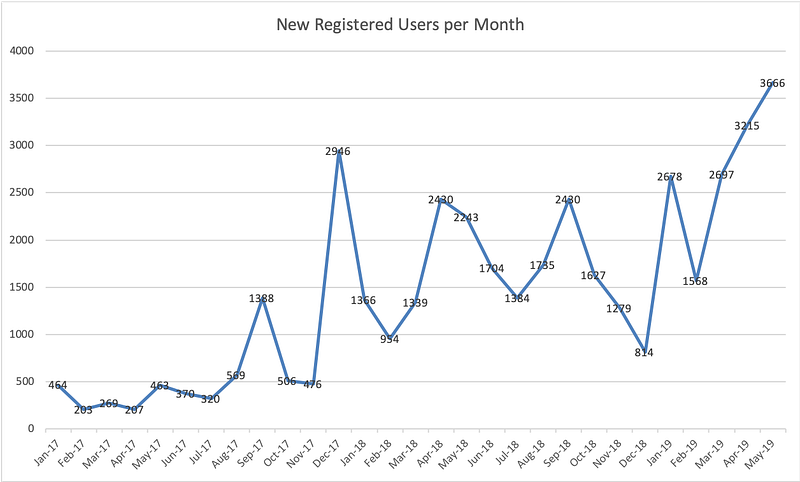
Summary: Count.It uses popular fitness tracking apps and social software to transform office culture. Launched out of beta in 2016, the company now has 6000 groups on the platform from 186 US metro areas, and 37 countries. Four hundred new groups, and 4000 new users now join each month. The company sees an opportunity to consolidate the market for tracker-driven wellness challenges, and to use tracker data to establish a global health/culture index for public and private sector firms. It seeks strategic partnership and growth capital to aggressively pursue this opportunity.
Customer Problem: Perhaps the most popular of all corporate wellness concepts is the office step challenge, and this is all the more so given the explosion of fitness tracking devices and apps in the last decade. Large American companies invest heavily in complex enterprise wellness programs, all of which include some fitness tracker component; but mid-market and smaller companies tend to cobble together wellness point solutions, or roll their own. The existing platforms available to these “SMB” groups for tracker challenges remain surprisingly primitive. The software is either rigid, (often attached to a health insurance programs); closed (limited to a single tracker brand, e.g. Fitbit); expensive, and/or unimpressive.
Bosses, wellness committees, and HR managers at hundreds of thousands of mid-market private and public sector firms, both in the US and abroad, are looking for a simple, engaging, low cost wellness/culture app that will win the hearts and minds of their co-workers.
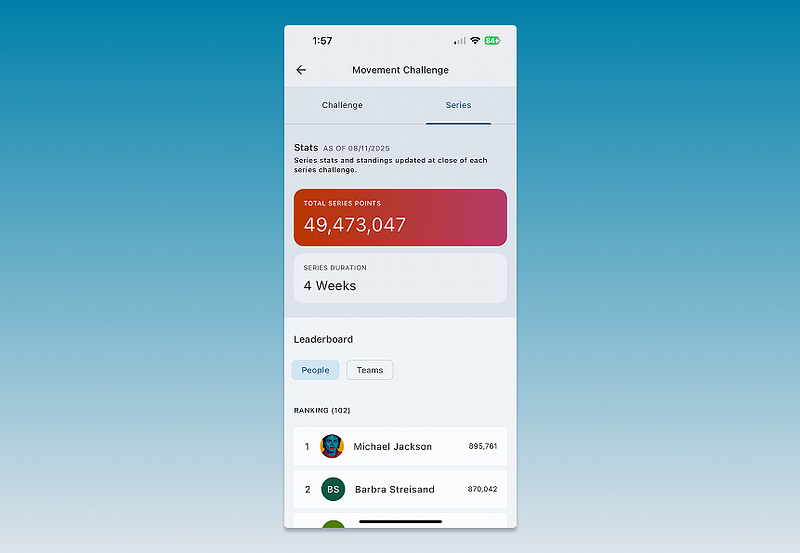
Product: Count.It connects to most popular smartphones, smartwatches and fitness trackers, and allows co-workers to participate in group challenges. The platform enables a range of challenge types, with automated incentives, and makes it easy for time-constrained admins to mange their group, set goals, configure rewards, and generate reports.
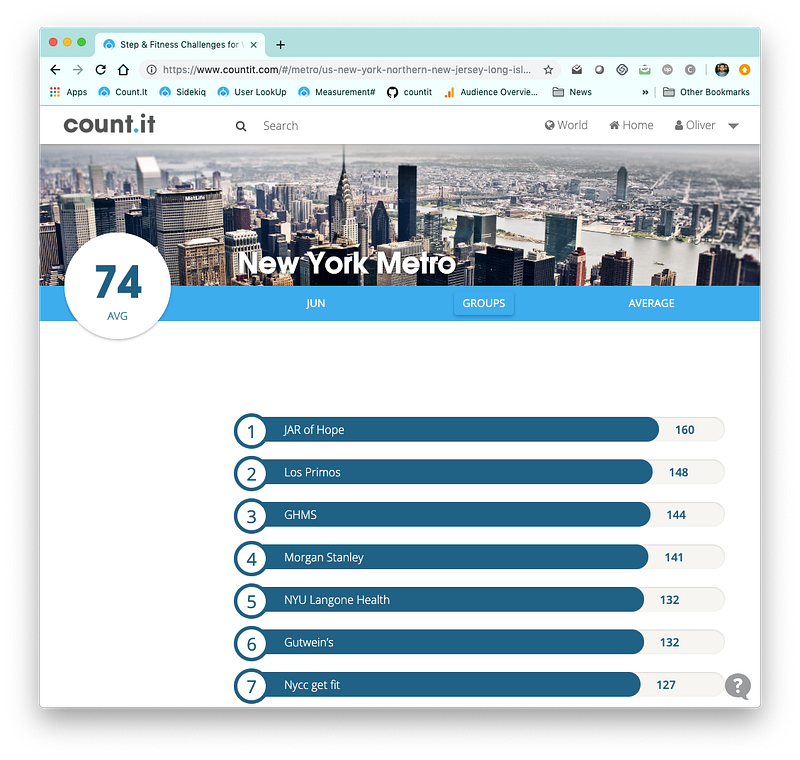
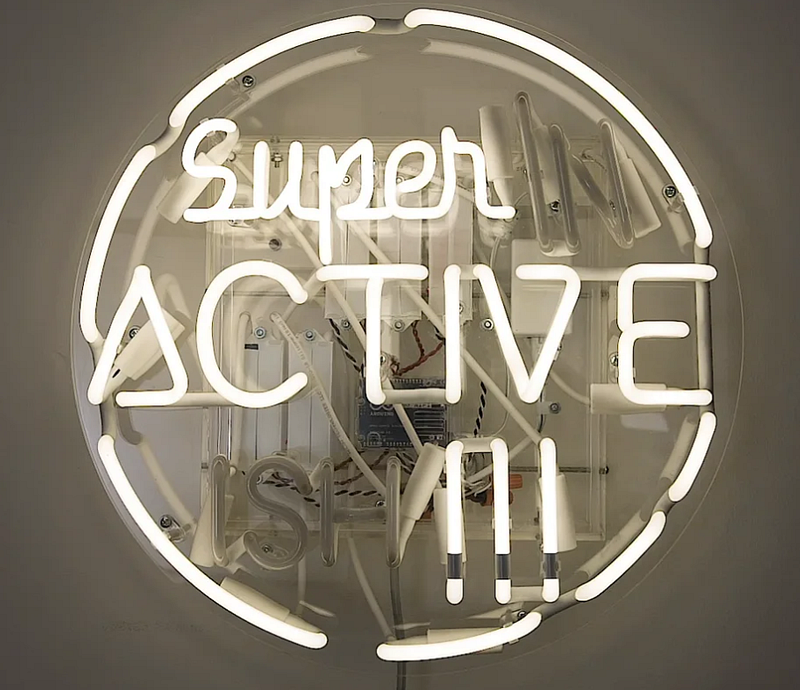
Count.It also allows for company vs. company competition, and group rankings by region, size, or even within #tag-driven public and private leagues. The platform integrates with group messaging tools like Slack, and has pioneered new formats for the social display of tracker data, including a neon “smart sign” designed for office settings.
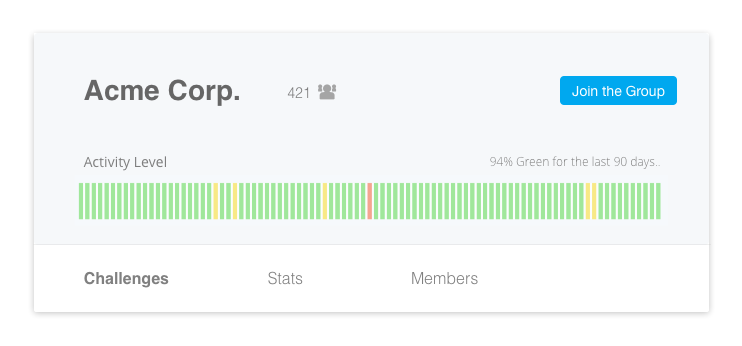
Active challenges are the company’s current product focus, but Count.It sees an opportunity to use tracker data to provide a passive, indexed “wellness score” to groups in its network.
Virtually every professional already carries a sophisticated biometric scanner on them at all times, or soon will. Whether or not established by Count.It, a data-driven standard will likely emerge to gauge the relative health or activity level of companies. This score will be checked by managers and prospective employees, shared on social media, and even examined by investors. The development of such a standard represents a major defensible business opportunity with a strongly positive network effect: As more groups join the platform, the data set becomes richer, as do the social connections between groups—and network membership becomes increasingly sticky.
Market : Total global shipments of “wearables” are expected to hit half a billion units annually in the next several years. At the same time, the global corporate wellness market generates $50 billion in revenues. One estimate puts the broader “employee engagement” market at $74 billion. These mega trends, along with the mainstreaming of SaaS software, together unlock the possibility of this mobile sensor-driven “office culture” platform. Count.It aims to own this market by initially targeting the 1.3 million SMBs in the U.S. with 10 to 1000 employees, as well as public sector firms and “rogue” teams within larger enterprises of similar size.
Business Model: Count.It is a SaaS product with a “freemium” sales model. At present, roughly 5% of all new groups upgrade to the paid “PRO” service, paying an average of $2.40 per user per month. The company generates additional revenue from the sale of fitness trackers, and anticipates sponsorship revenue at scale. The company has also sold a limited number of “private label” platform licenses to other U.S. wellness companies.
At the current pricing, a two percent penetration of the target U.S. SMB market generates $50 million in ARR at high (~60%+) EBITDA margins. This doesn’t account for public sector firms, teams from large firms, consumer groups, or anyone outside of the US.
Distribution: Driving widespread adoption of a discretionary employee benefit requires a compelling product offered at an aggressive price point. This means keeping the cost of both customer acquisition and customer support low. The Count.It approach is to focus strongly on product UX, and to build a marketing strategy around content marketing, organic SEO, and partner referrals. All of these approaches have been successfully tested, albeit with minimalist budgets. Marketing spend over the last 18 months is close to zero, but the brand is already on the top Google results page for several key searches, and the company has been chosen as a preferred B2B vendor by both Garmin and Fossil, the top watchmaker in North America. Sales are currently run by the CEO and a sales manager, and there is currently no full time marketing function.
Competitive Landscape. There is no clear leader for group challenges in the consumer or SMB market. Count.It competes with companies like Stridekick, DietBet, IncentFit, and Walker Tracker, none of which have “broken out” to achieve national or international brand recognition.
Among the top fitness tracker brands, Fitbit has a significant B2B wellness business, but the platform is “closed,” requiring all participants to use Fitbits. With losses accumulating, Fitbit is focused on selling smartwatches, and the company has recently dropped support for its web-based “activity groups” entirely.
The other top B2C wearables/app brands, (Garmin, Misfit, Strava, RunKeeper, etc.), provide social features and challenges, but they are designed primarily for personal use, and do not map well to B2B applications. Again, both Garmin and Fossil/Misfit have chosen Count.It as their preferred partner in the SMB market.
The enterprise wellness market has significant players such as Red Brick, Virgin Pulse, and Vitality, but tracker-driven challenges are just one part of complex, expensive programs that must meet a laundry list of enterprise requirements, and live within equally complex regulatory constraints. These companies struggle to sell to groups with fewer than 1,000 members, and they focus primarily on lowering health insurance costs, not improving corporate culture.
Last, most health insurance companies now integrate fitness tracker goals and rewards into their offerings, but these are designed for individuals, not groups, and remain a small piece of a larger product offering. Count.It regularly gets called from account reps at CIGNA, for example, seeking a more flexible challenge solution for their mid market clients.
Team: Count It is based in NYC. The company was founded and is led by Oliver Ryan. Ryan is co-founder of Apartment Therapy Media, onetime General Manager of SiliconValley.com, and a former staff writer for Fortune. Ryan has cultivated a team of remote contractors to handle engineering, sales, support, and G&A.