
Which wearable should you sleep with?
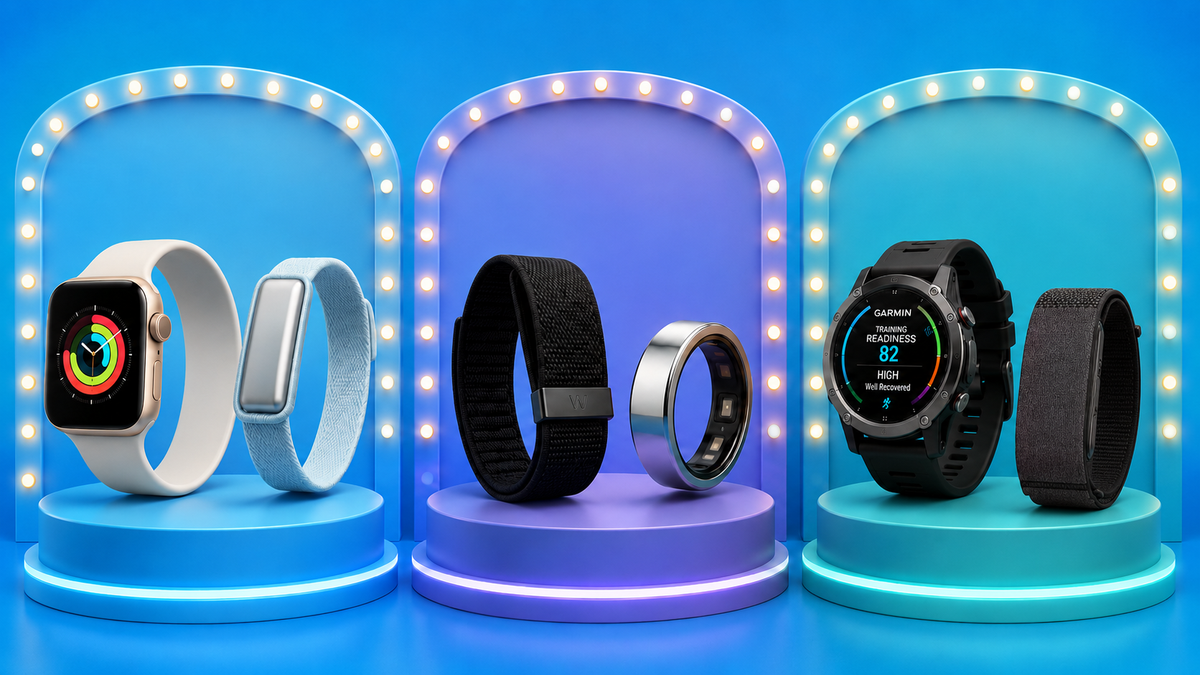
A hot take from the fitness app front lines: Wearables are having a moment. Google, long since overlord of Fitbit, released the Air in late May, a screenless tracker designed to keep up with indie darling Whoop, now valued at $10.1 billion, just shy of Oura's roughly $11 billion valuation. Oura, of course, makes everyone’s favorite ugly ring.
If you’re a serious runner, you’re now wondering whether you should cheat on your chunky Garmin with something a bit more svelte. Not to worry! Garmin released its very own sexy—for Kansas—Garmin CIRQA Smart Band on TUESDAY!
Such is the power of a stampede that the Apple rumor mill recently invented, without evidence, a minimalist “Apple Loop” tracker that was supposedly launching soon. The Loop was fake news, but the underlying idea made sense: People don’t want to sleep with their Apple Watches, and sleep data is crack for humans.
Nearly half of American adults—roughly 120 million of us—now own a wearable, and it’s getting pretty hard to make it through a summer picnic without talking REM scores.
It's not just the devices: social fitness app Strava has also "confidentially" filed for an IPO. When you’ve just sprinted up that hill, (or filed for an IPO), you want the world to know it.
Naturally, all the apps now chat you up with AI-powered lifestyle advice.
You seem really stressed, dude!
Thanks, Garmin.
So, here’s my unsolicited advice: Go for one of the indie players, or just keep running with your Garmin. Whatever is happening at the Google-Fitbit megaplex is directionally right, but lacks focus. The Fitbit Air is pretty, but it’s tethered to the attractive-but-underwhelming Google Health app. Google Health is bland, while Whoop knows how to manipulate you in all the right ways.
I assume the same is still true of Oura, but sadly, I dropped mine in the washing machine a while back. The Apple Watch does everything, of course—but maybe that’s the problem.
Final note to ponder: All of these apps are leaning hard into personal health utility. No surprise there: Big Tech longs for the Shangri-La of unlimited healthcare dollars. With the exception of Strava, none of the platforms emerging from all these sensors and data are finding creative uses beyond the personal, and increasingly medical. The vibe of corporate wellness, for example, is still very 2013: gym discounts and leaderboards.
But behavior is social, and culture is communal, and the most exciting social applications of personal data may still be to come. It's 2026, do you know the resting heart rate of your company?